Type 2 Diabetes and comorbidities DISCOVERing in Real World (From The DISCOVER Program*) : Algeria Baseline Data.
R. MALEK1*, D ROULA2, M BROURI3, M AMMI3
1 CHU Sétif,
2 CHU Constantine,
3 EPH Birtraria,
* Correspondence: Professor Rachid MALEK Head of department of internal medicine
CHU Sétif 19000 Algeria
ABSTRACT
La prise en charge des patients atteints de diabète de type 2 reste complexe et les données de la vraie vie restent rares.
OBJECTIFS
Décrire les caractéristiques à l’inclusion et le traitement des patients atteints de diabète de type 2 en Algérie en début de traitement hypocholestérolémiant de deuxième intention dans le cadre du programme mondial d’étude DISCOVER.
MÉTHODES
Le programme d'études observationnelle DISCOVER en cours (NCT023227662) et J-DISCOVER au Japon (NCT02226822) inclus plus de 15000 patients dans 38 pays, dont l'Algérie à travers six continents. La collecte de données concerne la base de référence (l'initiation d'un traitement antidiabétique de deuxième intention), six mois et chaque année pour une période de suivi de trois ans. Les principales caractéristiques enregistrées sont les paramètres de santé et les indicateurs de la prise en charge du diabète de type 2.
RÉSULTATS
293 patients algériens ont été inclus. Les spécialités des principaux investigateurs sont la médecine interne (50%), les endocrinologues-diabétologues (28,6%) et les médecins généralistes / médecins de famille (21,4%). L'âge moyen était de 55,3 ± 10,7 ans avec un sex-ratio M / F de 0,95. La durée moyenne du diabète était de 5,85 ± 4,78 ans. L'indice de masse corporelle (IMC) moyen était de 29,1 ± 4,6 kg / m2 et l'HbAlc moyen était de 8,3 ± 1,6%. La metformine était le traitement de première intention chez 77,5% des patients et les raisons des modifications du traitement étaient dominées par le manque d'efficacité. Dictée par la disponibilité des classes de médicaments, le traitement de première intention a été dominé par la metformine et le traitement de deuxième intention a été la metformine + sulfonylurées SU (bithérapie). Les patients ont utilisé l'autosurveillance glycémique dans 96,9% et une éducation thérapeutique a été fournie à 76,9% des patients. Des événements hypoglycémiques majeurs ont été enregistrés chez 1,9% des patients.
Parmi les comorbidités, une hypothyroïdie a été retrouvée chez près de 9% des patients. Les complications microvasculaires et macrovasculaires n'étaient pas négligeables, mais leur prévalence variait considérablement. L'hypertension était associée chez 38,9% des patients et l'hyperlipidémie chez 20,1% des patients.
Mots clés : diabète de type 2, prise en charge, Algérie
ABSTRACT
The management of patients with type 2 diabetes remains complex and the data of real life remain
scarce.
Aims: To describe the baseline characteristics and treatment of patients in Algeria with type 2
diabetes mellitusinitiating a second-line glucose-lowering therapy in the global DISCOVER
study program.
METHODS
The ongoing DISCOVER program of observational studies DISCOVER (NCT02322762) and J-DISCOVERin Japan (NCT02226822) enrolled more than 15000 patients in 38 countries including Algeria across six continents. The data collection concerns baseline (initiating a second-line anti-diabetic therapy), 6 months and each year for a follow-up period of three years. The main characteristics recorded are the health parameters and indicators of the management of type 2 diabetes.
RESULTS
293 patients from Algeria were included.
Specialties of Main Investigators are Internal
Medicine (50%), endocrine-diabetologists (28,6%) and General Practitioner (GP) / Family
Doctor (21,4%). Mean age was 55.3 ± 10.7 years with sex ratio M/F of 0.95. The average
duration of diabetes was 5.85 ± 4.78 years. Mean Body Mass Index (BMI) was 29.1 ± 4.6 kg/m2
and mean HbAlc was 8.3 ± 1.6%.
Metformin was the first line therapy in 77.5% of patients and the reasons for changes in
treatment were dominated by the lack of efficacy. Dictated by the availability of the drug
classes, the first-line treatment was dominated by Metformin, and the second line therapy was
Metformin+Sulphonylureas SUs (Dual).
Patients used the Self-monitoring of blood glucose (SMBG) in 96.9% and therapeutic education
was provided in 76.9% of patients. Major hypoglycemic events were recorded in 1.9% of patients.
The microvascular and macrovascular complications were not negligible,
but their prevalence varied markedly. Hypertension was associated in
38.9% and hyperlipidemia in 20.1% of patients.
1. INTRODUCTION
Diabetes is an important public health problem and is one of the major noncommunicable diseases[1]. A steady increase in the number of cases of diabetes and the prevalence of the disease has been recorded in recent decades [2]. According to the International Diabetes Federation (IDF) in its 8th Edition Atlas, diabetes now affects more than 425 million people, including one third older than 65 years. If nothing is done, the number of people with diabetes could rise to 629 million in 2045 [3].
The problem of type 2 diabetes lies in the close link with cardiovascular
diseases [4]. According to the American Heart Association (AHA) Adults
with type 2 diabetes (T2D) have a 2-to-4-fold higher risk for carduvascular
morbidity and mortality than adults without diabetes. Furthermore, the
AHA deems diabetes to be “1 of the 7 major controllable risk factors for
cardiovascular disease (CVD).Indeed, Adults with diabetes have higher
rates of coronary heart disease (CHD), stroke, and heart failure (HF) than
nondiabetic adults: - CHD death rates are 2 to 4 times higher - Risk of stroke is 2 to 4 times
higher - HF occurs twice as frequently in men and 5 times more frequently in women aged 45 to 74 years
[5].
Algeria is not spared by the global diabetes epidemic [6]. Diabetes
with its
complications represents a real public health issue with socio-economic
benefits and a very high cost [7].
Diabetes mellitus remains a major public health problem and Algeria
shares with the rest of the world a galloping and disturbing prevalence; In
fact, the 2003 WHO STEPwise among the 25-64-year-olds [8]
whereas in the 2016-2017 WHO STEPwise among the 19-69 years-olds the prevalence was 14.4% [9].
The management of patients with type 2 diabetes remains complex and
the data of real life remain scarce. The ongoing DISCOVER program of
observational studies enrolled more than 15000 patients in 38 countries
across six continents. Algeria was one of the participating countries with
293 patients. The data collection concerns baseline (initiating a
second-line anti-diabetic therapy), 6 months and each year for a
follow-up period of three years.
The main characteristics recorded are the health parameters and indicators
of the management of type 2 diabetes including; site characteristics,
physician speciality, patient demographics, the classes of drugs or their
combinations prescribed, vital signs and laboratory test results, medical
history of type 2 diabetes, including presence of risk factors, comorbidities
and co-medications, change(s) in type 2 diabetes treatments during
follow-up and reason(s) for change(s), number of major hypoglycaemic
events and occurrence of minor hypoglycaemic events, microvascular
complications (nephropathy, retinopathy, neuropathy and amputation) and
macrovascular complications [10]
The primary objective of the DISCOVER study program is to describe
the disease management patterns and clinical evolution in patients with
type 2 diabetes who are starting a second-line glucose-lowering therapy
(defined as adding a glucose-lowering drug or switching between
therapies) after failure of first-line oral treatment with a monotherapy,
dual therapy, or triple therapy.
In addition, the study aims to describe the patient, physician, and healthcare
system determinants of treatment patterns, and the associations between treatment patterns and a broad
range of outcomes, including
glycemic control, hypoglycemic episodes, incidence of complications
(e.g. microvascular and macrovascular events), healthcare resource
utilization (e.g. hospitalizations and emergency department visits), and
patient-reported outcomes (PROs).
The aim of the present analysis was to describe thebaseline characteristics
and treatment of patients enrolled in Algeria.
2. MATERIALS AND METHODS.
The DISCOVER Study Algeria is an observational study in real life with the same protocol of the DISCOVER observational study program :DISCOVER in 37 countries (NCT022322762) and J-DISCOVERin Japan (NCT02226822). It included 293 patients spread over 14 sites nationwide.This is a non-interventional study; registered participants undergo clinical evaluations and receive standard medical care as determined by their attending physicians. Patients don’t receive any experimental treatment or experimental intervention because of their participation in the study. Participation was voluntary, and patients are free to withdraw from the study at any time and without prejudice to their subsequent treatment.
Data collection is done using an electronic form (eCRF) via a web-based data capture system. For all eligible patients who signed the informed consent form, in addition to the demographic, clinical characteristics are collected at the outset (date of initiating of second-line therapy in add-on or switching after a first-line oral treatment with a monotherapy, dual therapy, or triple therapy) and 6, 12, 24 and 36 months in a 4-month period (± 2 months) for a follow-up of three years. The sites and investigators selected were involved in the management of patients with type 2 diabetes and of different types of physicians (primary care physicians, diabetologists, endocrinologists, Internal medicine, and other specialists) and practices (primary care centers, specialized diabetes centers, and different types of hospitals) Baseline data will be collected at the routine visit, during which the second-line glucose-lowering therapy will be prescribed. The variables recorded were physiological parameters, laboratory test results, change(s) in glucose-lowering therapy and reason(s) for change(s) (e.g. suboptimal glycemic control and adverse events), HbAlc level at time of change(s), occurrence of microvascular and macrovascular events, occurrence of minor and major hypoglycemic events, changes in comorbidities and co-medications,and healthcare resource utilization.
Statistical analysis
Categorical data are presented as numbers and percentages.Mean
(standard deviation [SD]) values, median (interquartilerange [IQR])
values arereported, when appropriate.
Descriptive statistics were used to summarize demographic variables,
patient characteristics, treatment patterns, lab test results, incidence of
complications and hypoglycemic events. Data were stratified by pharmacological
drug class and/or individual agent when clinically relevant.
All statistical analyses were performed using the SAS statistical software
system (SAS Institute, Inc., Cary, NC).
Ethical and regulatory considerations
This study was conducted under the Guidelines for Good Pharmacovigilance Practices (GVPs) and Good Pharmacoepidemiology Practices (GPPs) issued by the International Society for Pharmacoepidemiology (ISPE), the Declaration of Helsinki and its amendments, and the Algerian Ministry Of Health guidelines. Prior to the enrolment of any patients in the study, the following documents were provided by the site.
- Copy of the IRB/IEC approval letter for the protocol and informed consent (all written information provided to the patient must be approved by the IRB/IEC).
- Copy of the IRB/IEC-approved informed consent document to be used.
- Copy of the protocol sign-off page signed by the investigator.
- Fully executed site agreement.
The study protocol was approved by the Ministry of health and the clinical research Ethics Committee. All participating patients providedsignedinformed consent.
3. RESULTS
3.1. SITE CHARACTERISTICS.
Fourteen sites have been selected across the national territory and all are
in urban areas(100%). These investigation sites included University/teaching
hospital (57.1%), Specialized diabetes centre (21.4%), Primary care centre (7.1%),
Other type of center (14.3%) and 78.6% of the centers were Public. 57.1% of the
investigation sites have Speciality Care (e.g. psychologist, podiatrist).
Specialties of Main Investigators are Internal Medicine (50%), endocrine-diabetologists
(28.6%) and General Practitioner (GP) / Family Doctor (21.4%).
3.2. DEMOGRAPHIC, CLINICAL AND BIOLOGICAL CHARACTERISTICS.
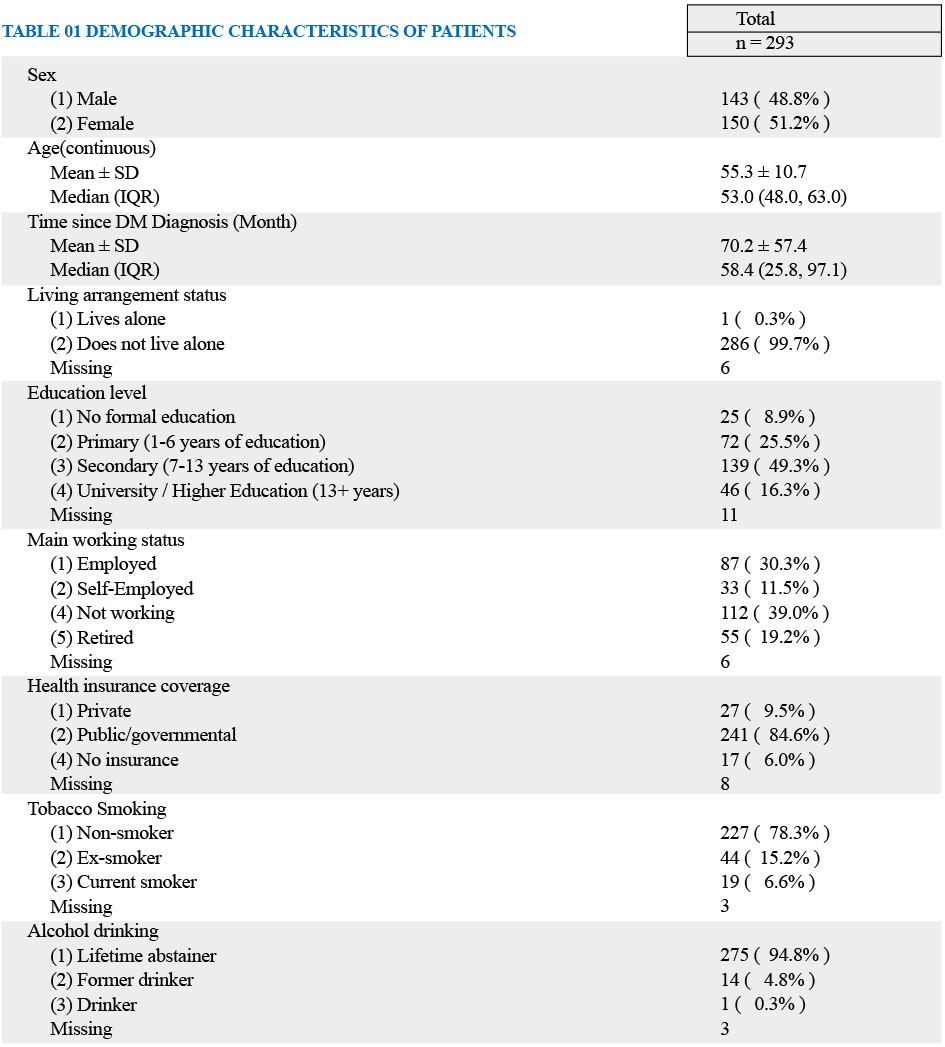
In Algeria, 293 patients were included. Mean age was 55.3 ± 10.7 years
with sex ration M/F of 0.95. The average duration of diabetes was 5.85 ± 4.78 years.
More than 90% of patients have insurance coverage and almost 65 % of patients have
at least a secondary education level (table 1).
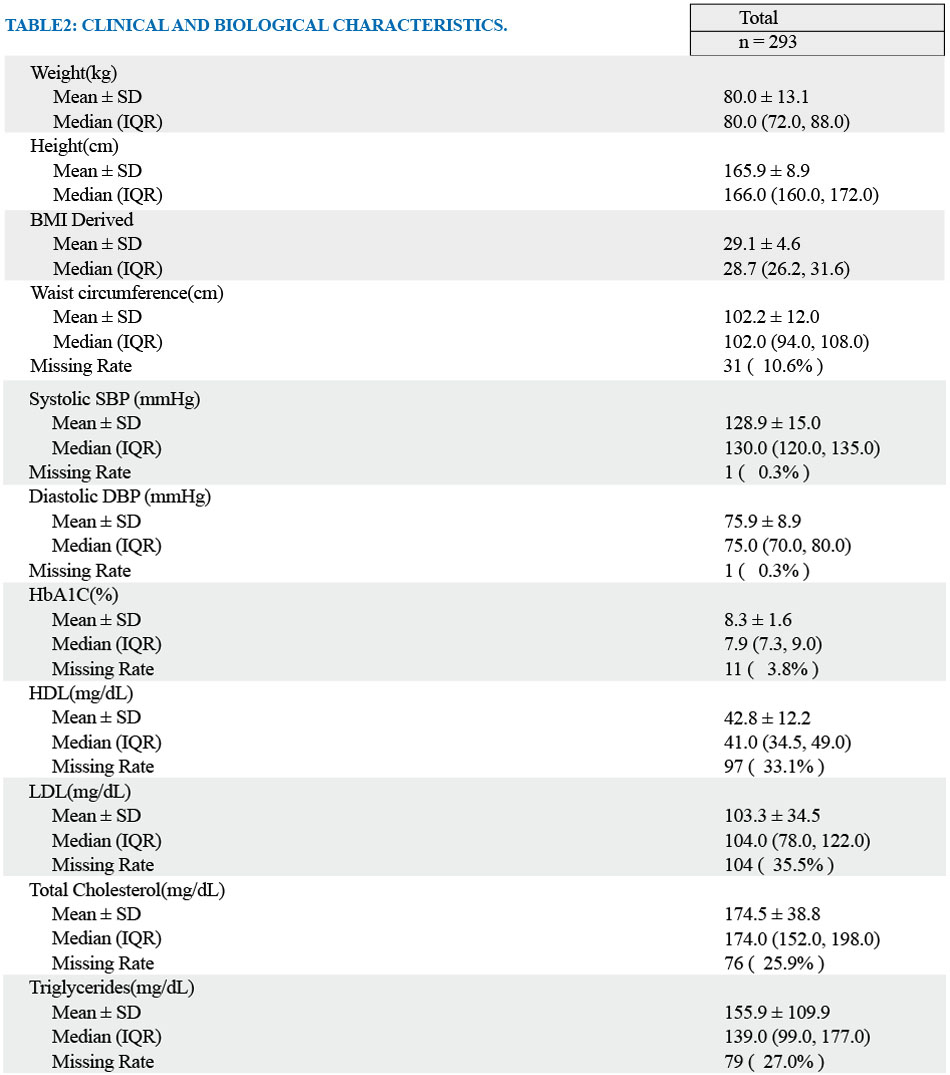
Mean Body Mass Index (BMI) was 29.1 ± 4.6 kg/m2 and mean Waist circumference (cm)
of almost 90% of patients was 102.2 ± 12.0.
Mean systolic blood pressure was 128.9 ± 15.0 mm Hg and mean diastolic blood pressure was 8.3
± 1.6% and mean Fasting Glucose(mg/dL) of almost 75% of patients was 174.3 ± 60.3.
Mean LDLc and mean HDLc (mg/dL) of almost 65% of patients were 103.3 ± 34.5 and 42.8 ± 12.2
respectively. More than 99% of patients declared not live alone (table 2).
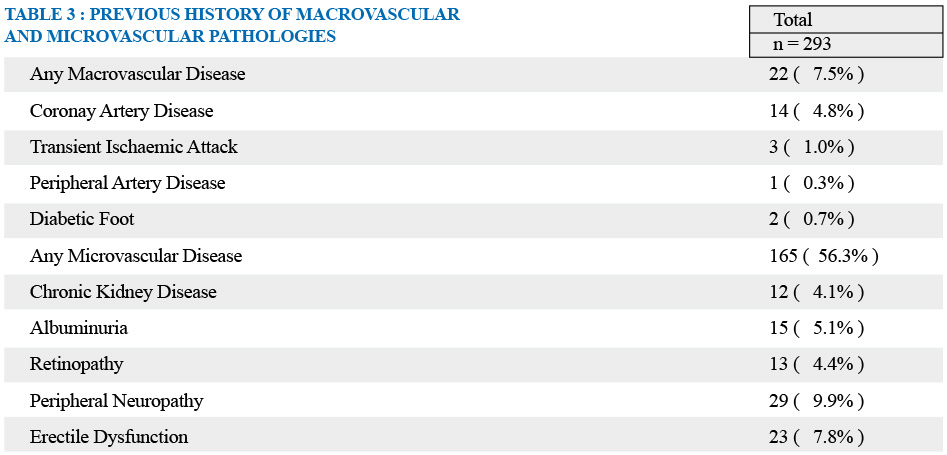
3.3. PREVIOUS HISTORY OF MACROVASCULAR AND MICROVASCULAR PATHOLOGIES COMPLICATIONS.
The percentages and types of the different microvascular complications
(history of chronic kidneydisease, retinopathy, retinal laser photocoagulation,
auto-nomic neuropathy, peripheral neuropathy and erectile dysfunction)
and macrovascular complications (history ofcoronary artery
disease, heart failure, angina, myocardialinfarction, percutaneous coronary
intervention, coronaryartery bypass grafting, stroke, transient ischaemic
attack, carotid artery stent, carotid endarterectomy, peripheral arterydisease,
diabetic foot, amputation and defibrillator use) are shown in (table 3).
The prevalence of microvascular pathologies was greater than that of
macrovascular complications.
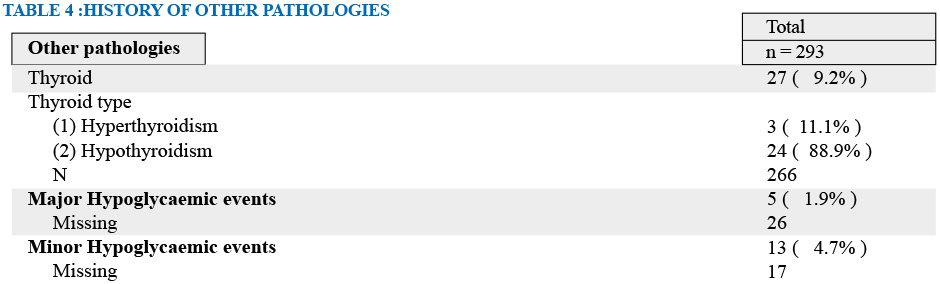
Hypertension was associated in 38.9% and hyperlipidaemia in 20.1% of patients.
Among the comorbidities hypothyroidism was found in almost 9% of patients, and
major hypoglycaemic events were recorded in 1.9% of patients (table 4).
3.4. DIABETES TREATMENT: FIRST LINE THERAPY
Among the new antidiabetic classes, onlydipeptidyl peptidase-4 (DPP-4) inhibitors (sitagliptin, vildagliptin) and one glucagon-like peptide-1 (GLP-1) receptor agonist (liraglutide) were registered in Algeria, but not reimbursed, which limited their prescription considerably.
FIRST-LINE THERAPY
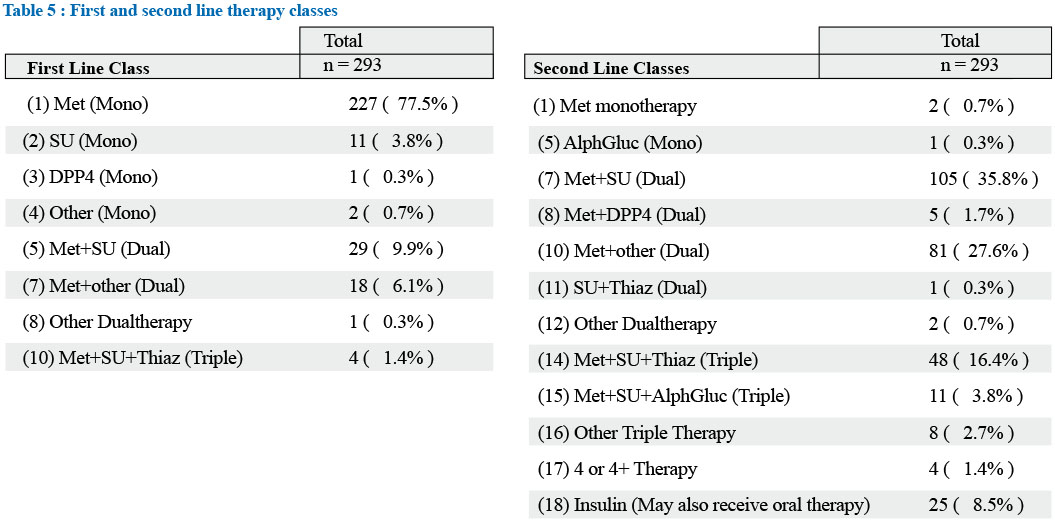
Monotherapy was the first-line therapy in almost 80% of patients and
metformin MET monotherapy was the mostly prescribed first-line therapy (77,5%), followed by combinations
of MET + sulphonylureas SUs (9,9%).
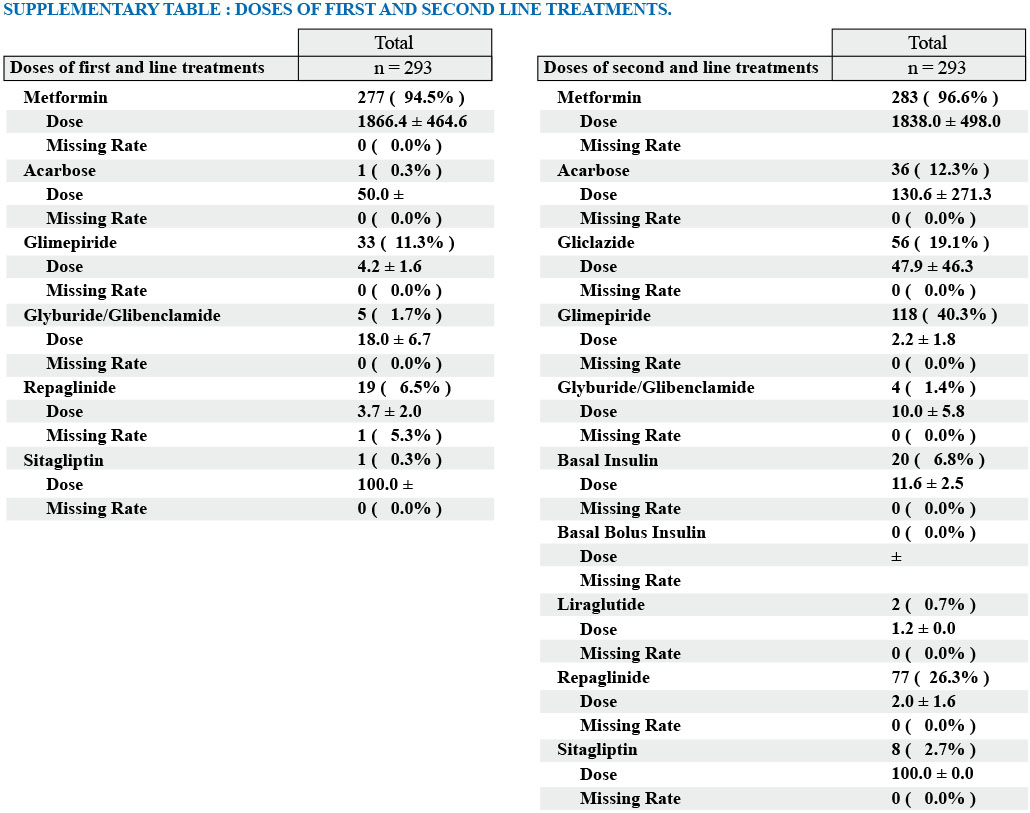
Among first line classes Metformin MET with a mean daily dose of
1866.4 ± 464.6 mg was used in 94.5%, followed by sulphonylureas Sus in 15.3% of patients
(table 5, supplementary table).
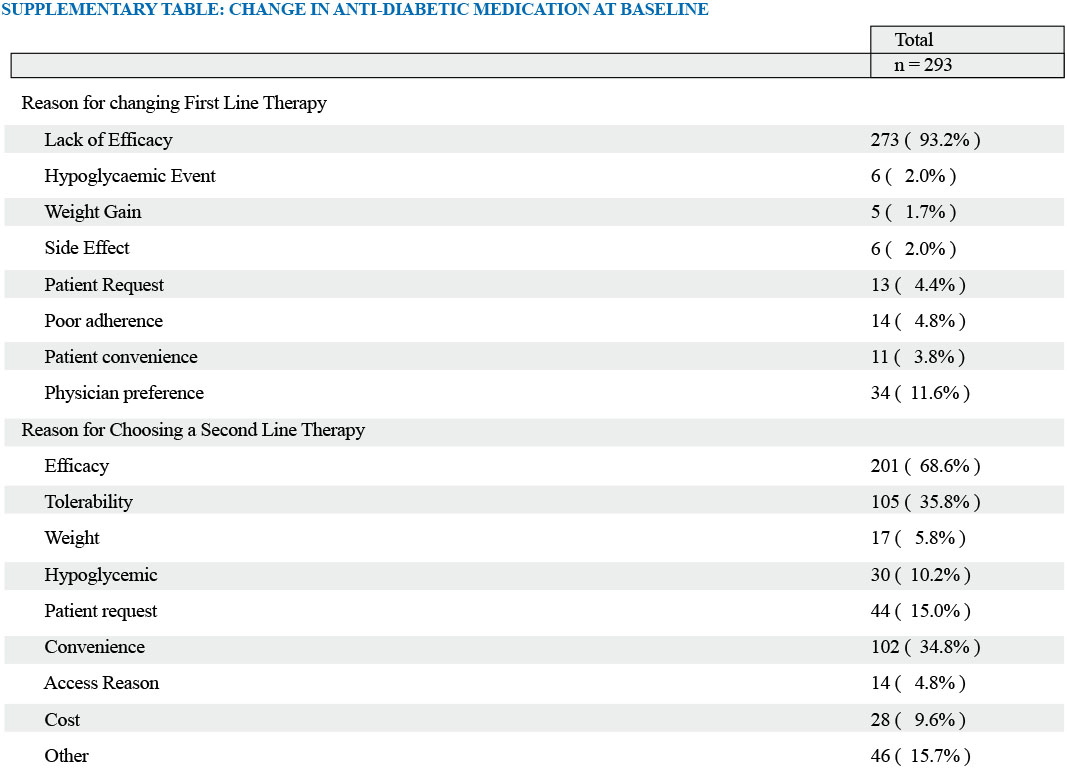
Change in Anti-diabetic Medication was mostly in an outpatient setting
(91% of patients) and the lake of efficacy was the main determinant of moving
the reasons for changing first line therapy we found also; Physician preference (11.6%),
Poor adherence (4.8%), Patient Request (4.4%), and hypoglycaemic Event (2.0%) (supplementary table
Change in Anti-diabetic Medication at Baseline).
SECOND-LINE THERAPY:
Combinations of MET + Sus (35.8%) and MET + Meglitinides (22.8%)
were the most commonly prescribed second-line therapies whereas
Insulin was used in only 8.5% of patients (table 5, supplementary
tabledoses of first and second line).
The choice of second-line treatment was determined by the expected
efficacy in 68.6% followed by tolerability 35.8%, convenience 34.8%
however the cost was in only 9.6% the reason for choosing the second line
therapy.
76.9% of patients received education on diabetes treatment and management in
past 1 year and 96.6% used glucose monitoring (supplementary
tableChange in Anti-diabetic Medication at Baseline).
3.5. CONCOMITANT MEDICATION
43.3% of patients received antihypertensive drugs among which Renine Angiotensin System (RAS)
Blockers represented almost 90%, Calcium Channel Antagonists almost (35%), Diuretics almost (28%),
and Beta-Blockers almost (20%).
36.9% of patients received Lipid-lowering Drugs among which statin was used in nearly 80% of
patients.
30.7% of patients received Aspirin, and 8.2% were treated with Concomitant
Thyroid Replacement Drugs.
4. DISCUSSION
In Algeria, this the first observational study in real-world setting that
describes the characteristics, treatment and outcomes ofpatients with type
2 diabetes mellitus after initiatingsecond-line glucose-lowering therapy.
Algeria, with 293 patients included, is one of the 38 countries included in
the ongoing DISCOVER study (15.992 patients) [10].
As individuals with diabetes require lifelong personal care to reduce the
possibility of developing long-term complications. A good knowledge of
diabetes risk factors, including obesity, dyslipidaemia, hypertension,
family history of DM, and sedentary lifestyle, play an essential role in
prevention and treatment. Also, sociodemographic, economic, psychological,
and environmental factors are directly and indirectly associated
with diabetes control and health outcomes[11].
To provide a comprehensive overview a broad spectrum of investigators’
specialities was involvedmostly Internal Medicine followed by
endocrine-diabetologists and then General Practitioner (GP) / Family Doctor.
The mean age was 55.3 ± 10.7 years with an African Region Countries(Algeria and South Africa)
overall mean age of 54.9 years younger than Europe Region Countries (Austria, CzechRepublic,
Denmark, France, Italy, the Netherlands,Norway,Poland, Russia, Spain, Sweden and Turkey) overall mean
age of 61.9 years [11]. And this was
reported in the literature data [6, 15, 16].
Most patients were with overweight per the mean BMI of 29.1 ± 4.6 Kg/m2.
The mean glycemic level of patients was not to the targets recommended
by the international guidelines [13,14]; Mean HbAlc was 8.3 ± 1.6% almost
similar to other regions in DISCOVER Study program outside Europe [11]and this is expected in a population of patients who were
escalating from first- to second-line therapy due to Lake of Efficacy as
the main reason for changing first-line therapy.
The most commonly prescribed First-line treatment was Metformin
which was compliant with the international guidelines [13,14]. The most
commonly prescribed 2nd line treatment was Metformin + SU and the
Changes in treatment were mostly determinated by efficacy and this was
similar in Africa, South-East Asia and the Western Pacific regions however in Americas, Europe and the
Eatern
Mediterranean regions of the DISCOVER Study program the most
prescribed 2nd line treatment was metforminand a DPP-4 inhibitor[17].
Among comorbidities almost 9% diabetics were treated for hypothyroidism. This is to be taken into
consideration given the frequent association,
the need for screening and the impact of hypothyroidism in terms of
hypoglycemia [18,19,20,21,22].
Hypertension was documented in 117 patients while 127 patients had been treated with antiHypertensive
drugs mostly with Renin Angiotensin
System Blockers (115 patients).
Hyperlipidaemia was documented in 59 patients while Lipid-lowering Drugs were prescribed for 108.
30.7% of patients were taking antiplatelet drugs.
According to DISCOVER Algeria data, the rates of microvascular and
macrovascular complications standardized for age and sex, were respectively 24.1% and 6.1%.
These rates were divergent from other countries with comparable mean HbAlc, example the mean HbAlc of
the overall
Global DISCOVER Study programme population was 8.3 ± 1.6% while
the prevalence of microvascular complications and macrovascular
complications were respectively 18.8% and 12.7% overall[11]. We assume
that the relative low prevalence of macrovascular complications could be
explained by a good level of cardiovascular prevention.
5. CONCLUSION:
This observational study summarizes in real world settings the principal characteristics of type 2 diabetic patients. In a sample of 293 patients inititiating a second-line anti-diabetictherapy the mean HbAlc in 96,2% of patients was not at the recommended targets. The management of the patients was ensured mostly by specialist doctors. The comorbidities associated with diabetes were hypertension, dyslipidaemia and to a lesser degree hypothyroidism. First-line treatment was consistent with the guidelines but in the second line patients received mainly Sulphonylureas SU and this apparently was due to the unavailability of new drugs. The relative low prevalence of macrovascular complications could be explained by the good level of cardiovascular prevention.
Acknowledgements
The DISCOVER Study Algeria investigators:
M AZZOUZ, K BELKACEM, F BENBOUAZZA, A BOUAZDI, S
BOUREZANE, M BROURI, A CHERRAK, A HALLAL, M KHARROUBI,
N MALLEM, F MOHAMMEDI, A RAHOU, D ROULA, M
AMMI, S BENSALEM, S BENCHAOULIA, A BERRA, M DJOUIMA,
R ELAOUFI, MS MERAD, S SAADI, S ZIANI.
The DISCOVER Study was funded by AstraZeneca
Disclosures
R.MALEK has received honoraria for conference, lecturing or attending advisory boards from pharmaceutical companies including AstraZeneca, Boehringer Ingelheim, Eli Lilly, Servier, Hikma.
Références :
- Int J Health Sci (Qassim). 2007 Jul; 1(2): V-VIII.
- Rapport mondial sur le diabète. Organisation mondiale de la Santé 2016. ISBN 978 92 4 256525 6
- http://diabetesatlas.org/resources/2017-atlas.html
- World J Diabetes. 2015 Oct 10; 6(13): 1246-1258 doi: 10.4239/wjd.v6.i13.1246
- Bell DSH. Diabetes Care. 2003;26:2433-41.
- R Malek, Épidémiologie du diabète en Algérie : revue des données, analyse et perspectives. Médecine des maladies Métaboliques - Mai 2008 - Vol. 2 - N°3.
- Larbi Lamril, Erofile Gripiotis2, Alessandra Ferrario2* Diabetes in Algeria and challenges for health policy: a literature review of prevalence, cost, management and outcomes of diabetes and its complications. Globalization and Health 2014, 10:11 http://www.globalization and health.com/content/10/1/11.
- Ministry of Health Algeria, World Health Organization. AlgerieEnquête STEPS 2003, tech. rep. Ministry of Health Algeria, World Health Organization; 2005.
- STEPwise OMS. http://afro.who.int/fr/media-centre/events/enquete-stepwise-algerie-2016-2017-
- LinongJi , Bonnet F, Charbonnel B, et al. Towards an imporoved global understanding of treatment and outcomes in people with type 2 diabetes: rationale and methods of the DISCOVER observational study program. J DiabetesComplicat. 2017;31:1188-96
- Mikhail Kosiborod, Marilia B. Gomes , Antonio Nicolucci , et al. Vascular complications in patients with type 2 diabetes: prevalence and associated factors in 38 countries (the DISCOVER study program).Cardivasc Diabetol. 2018 Nov 28;17(1):150. doi: 10.1186/12933-018-0787-8.
- Front Public Health. 2016; 4: 195doi: 10.3389/fpubh.2016.00195.
- http://www.idf.org/e-library/guidelines/128-idf-clinical-practice-recommendations-for-managing-type-2-diabetes-in-primary-care.html.
- Silvio E. Inzucchi,1 Richard M. Bergenstal , et al. Management of Hyperglycemia in Type 2 Diabetes, 2015: A Patient Centered Approach Update to a Position Statement of the American Diabetes Association and the European Association for the Study of Diabetes Diabetes Care 2015;38:140-149 | DOI: 10.2337/dc14-2441.
- IDF Diabetes Atlas I Sixth edition .http://www.idf.org/e-library/epidemiology-research/diabetes-atlas.html
- Hilary King, MD, DSC, Ronald E Aubert, PHD and William H Herman, MD, MPH. Global Burden of Diabetes, 1995-2025: Prevalence, numerical estimates, and projections. Diabetes Care 1998 Sep; 21(9): 1414-1431.
- Marilia B. Gomes, Wolfgang Rthmann, Bernard Charbonnel et al Treatment of type 2 diabetes mellitus worldwide:Baseline patient characteristics in the globalDISCOVER studydiabetes research and clinical practice 151 (2009) 20 - 32.
- Cheng Han, Xue He, Xinghai Xia, et al. Subclinical Hypothyroidism and Type 2 Diabetes: A Systematic Review and Meta Analysis .PLOS ONE | DOI:10.1371/journal. pone. 135233 August 13, 2015
- Sanjay Kalra, Thyroid disorders and diabetes J Pak Med Assoc. Vol. 64, No. 8,August 2014.
- Ibrahim M Elmensahawi, Sultan S Alotaibi Amal SalehAlazmi, et al. Prevalenceofthyroiddysfunction in diabeticpatients. Diabetes MetabDisordControl. 2017;4(2):55-60.
- Interactionhypothyroidies m CV: Klein, NEJM, 2001; 344:501, Chadarévian, JCEM, 2001; 86:732.
- Sayantan Ray* andSujoyGhosh . ThyroidDisordersand Diabetes Mellitus: Double Trouble. J Dia Res Ther 2(1): doihttp://dx.doi.org/10.16966/2380- 5544.113